From 11 to 13 November 2026, Tena Prelec and Barbara Frey from the Centre for Peace and Conflict Studies (CSMK) at the University of Rijeka participated in a series of academic and policy engagements in Berlin and Potsdam, addressing questions of European integration, environmental justice, democratic governance and geopolitics, and discussing their recent policy paper Ending Green Stabilitocracy: Germany’s Role in Moving from Extractive to Trasformative Integration in the Western Balkans.
The visit brought together activities within the ENVIJUST-WB – Green Transition and Environmental Justice in the European Periphery project, a Marie Skłodowska-Curie Postdoctoral Fellowship hosted at CSMK, and the work of the Balkans in Europe Policy Advisory Group (BiEPAG).
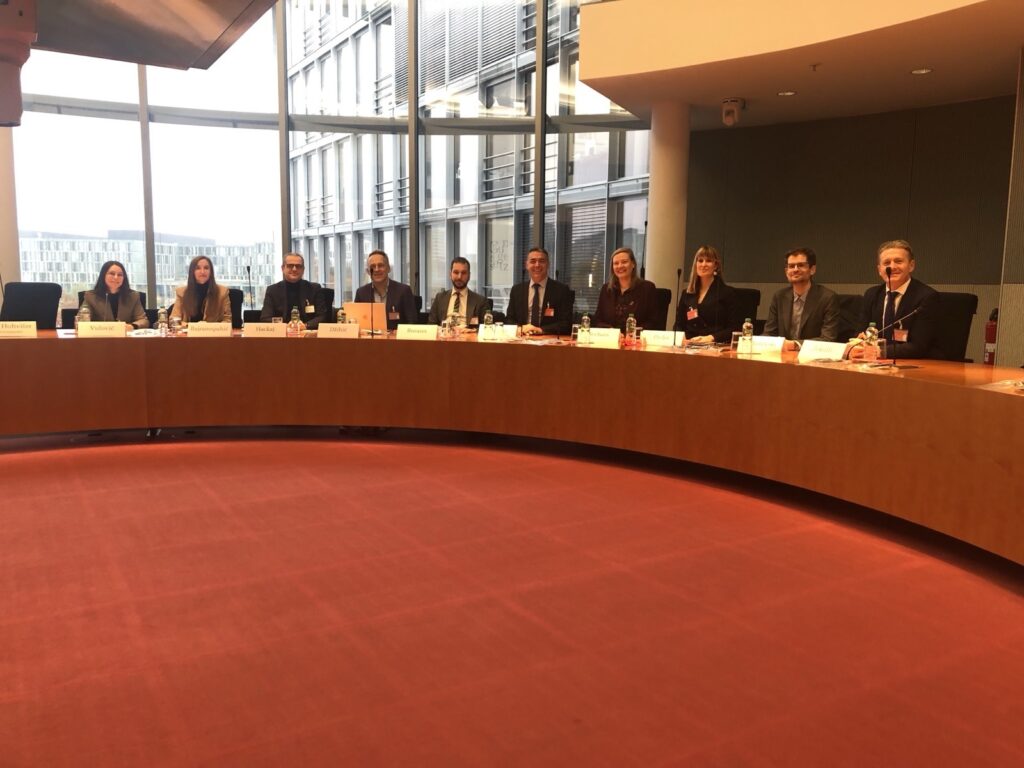
The programme included policy meetings at the German Bundestag and an event organised in cooperation with the German Institute for International and Security Affairs (SWP). Discussions with German policymakers and policy experts addressed the evolving dynamics of EU enlargement, Montenegro’s accession prospects and the challenges of democratic reform in the Western Balkans.
Prelec and Frey also held exchanges with the Global Public Policy Institute (GPPi) and other German and international experts on the geopolitical and societal implications of critical raw materials extraction in the Western Balkans, drawing on their ongoing joint research within ENVIJUST-WB. Particular attention was devoted to environmental justice, civic mobilisation and the conditions under which the green transition could contribute to transformative European integration, rather than reinforce existing patterns of extractivism, economic dependency and weak governance.
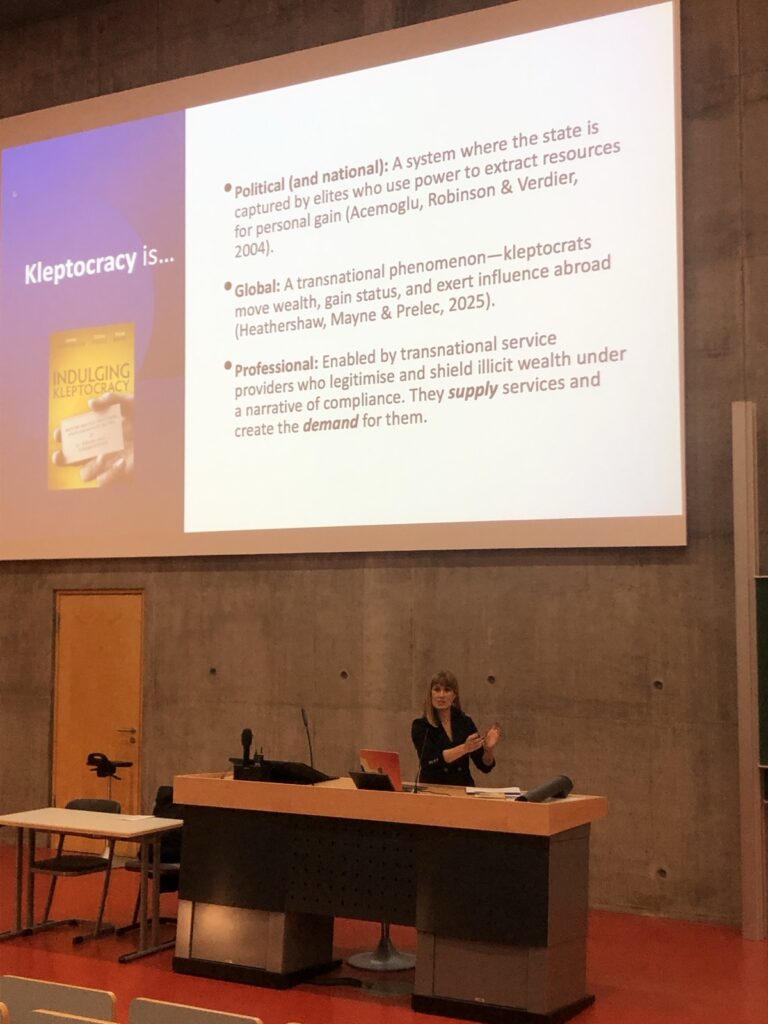
On 12 November, Tena Prelec delivered an invited public lecture entitled “Kleptocracy and Geopolitics” at the University of Potsdam. The lecture explored the intersections between transnational corruption, elite networks and geopolitical competition, as well as shifting international approaches to countering kleptocracy.
The visit further strengthened CSMK’s international academic and policy networks, contributing to knowledge exchange between researchers and policymakers and bringing research findings into contemporary European policy debates.
The ENVIJUST-WB project is funded by the European Union under the Horizon Europe Marie Skłodowska-Curie Actions programme (Grant Agreement No. 101265415).